


Introduction
Food labels are designed to help consumers understand the nutritional composition of the food they eat. However, many people do not realize that food contains far more nutrients than what typically appears on a standard nutrition label.
Understanding the range of nutrients present in food can provide deeper insights into nutrition and food transparency.
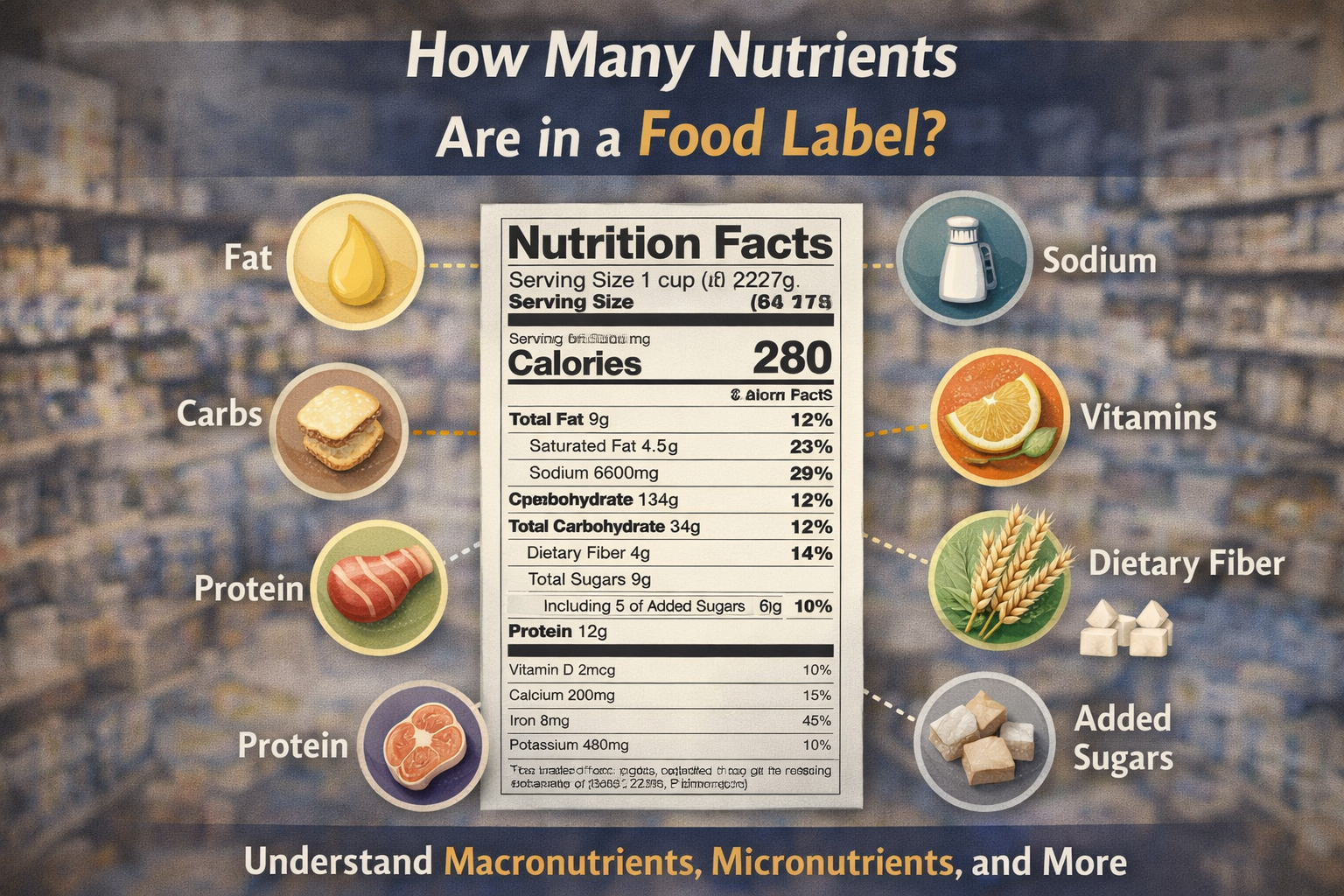
Nutrients Typically Displayed on a Food Label
Most food labels display a limited set of key nutrients that are important for public health.
Common nutrients displayed include:
- Energy (Calories)
- Total Fat
- Saturated Fat
- Trans Fat
- Carbohydrates
- Sugars
- Protein
- Sodium
These nutrients are considered essential for helping consumers monitor their diet.
Why Only a Few Nutrients Are Displayed
Regulatory authorities limit the number of nutrients displayed on food labels to keep them simple and easy for consumers to understand.
Displaying too many nutrients could make labels difficult to read.
The Full Nutritional Profile of Food
In reality, food contains many more nutrients than what appears on a label.
Comprehensive nutritional analysis can include over 109 nutrients. We cover all of them in our reports, such as:
Amino Acids
- Methionine
- Lysine
- Proline
- Leucine
Vitamins
- Vitamin A
- Vitamin C
- Vitamin D
- Vitamin E
Minerals
- Iron
- Calcium
- Magnesium
- Zinc
Bioactive Compounds
- Carotene
- Theobromine
- Flavonoids
These nutrients provide deeper insights into the nutritional value of food.
Why Detailed Nutritional Analysis Matters
Detailed nutrient analysis helps food businesses:
- Understand the full nutritional composition of their products
- Develop healthier recipes
- Provide transparent food information
- Support research and product development
For restaurants, detailed reports can also support menu labeling and regulatory compliance.
Conclusion
While food labels display a limited number of nutrients for simplicity, the complete nutritional profile of food is much more complex.
Advanced recipe analytics can reveal hundreds of nutritional components, helping food businesses better understand and communicate the value of their products.